Chair of the Session:
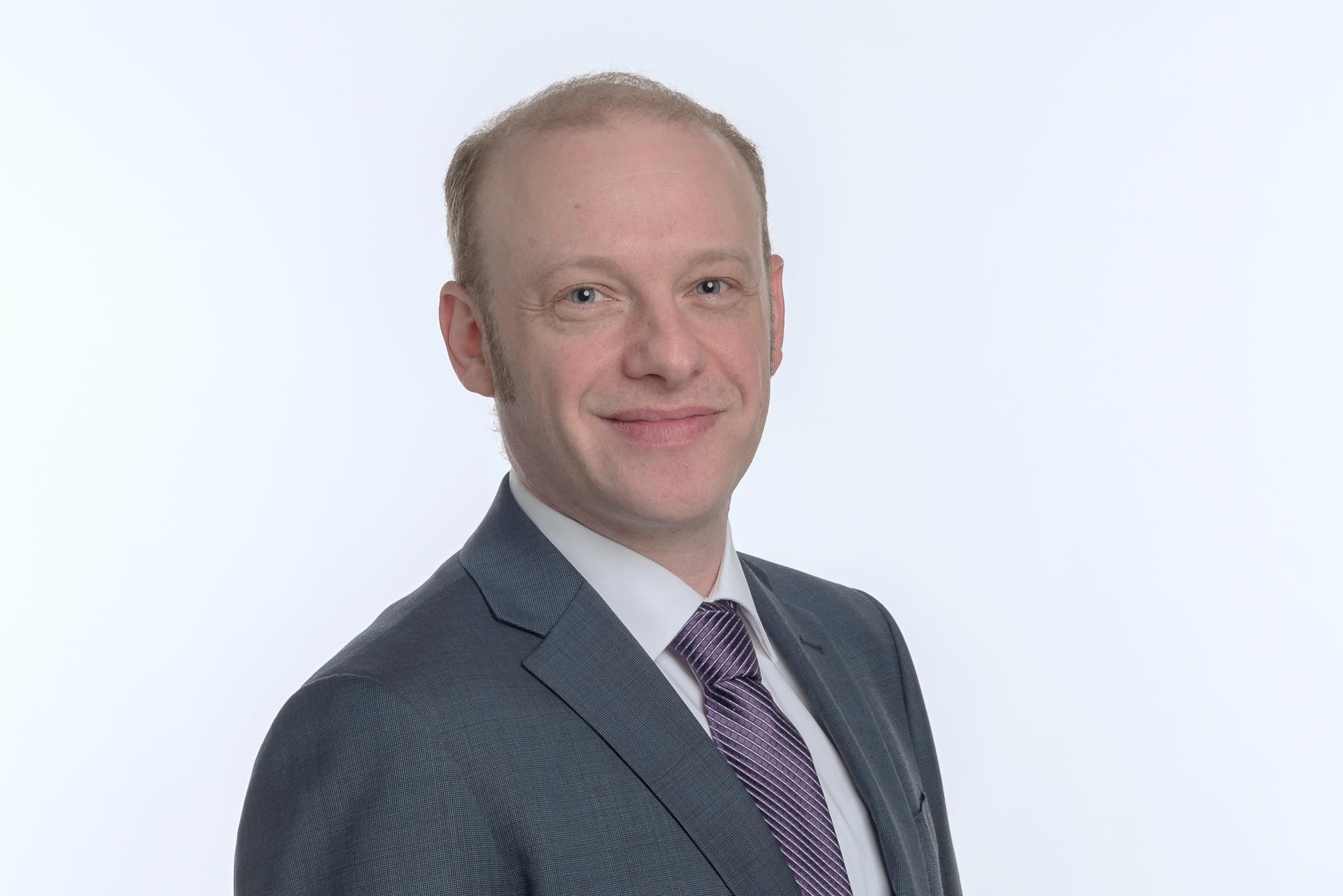
Mohamed El Tahan
EACTA Education Chair, Mansoura University, Egypt
Scientific Moderators:
Gabor Erdoes
Programme Director at Bern University, Switzerland
Jan Schreiber
Programme Director at Maastricht University, The Netherlands
Programme:
| Topic |
Speaker |
| Important organizational issues for NON-EU fellows: The perspective of a program director |
Anna Flo Forner (Leipzig, Germany) |
| Important organizational issues for NON-EU fellows: The perspective of a fellow |
Luis Eduardo Mendoza Vazquez (Milan, Italy & Guatemala City, Guatemala) |
| How to teach non-technical skills? How to improve communication? |
Vera von Dossow (Bad Oeynhausen, Germany) |
| One-year experience fellowship report: How did I become an expert? |
Ralph Dudink (Maastricht, The Netherlands) |
| Q&A |
- |
Data from a survey that has been held among all fellows who have completed theirt fellowship will be make public soon (in 2021)
Speakers:
Jan Schreiber
In first instance the EACTA CTVA fellowship is a clinical fellowship. Some centres may offer the opportunity to do research during the Basic fellowship (1 year). In a 2 year fellowship the second year might be focused on research.
It heavily depends on the specific centre and on national regulations. In most centres fellows are allowed to work under independent supervision after they have given a proof of their competence.
Speakers:
Jan Schreiber
The question has to be discussed by the Educational Committee. Because EACTA is a supranational organisation it may require a national regulator in a EU-country to establish such a study.
Speakers:
Jan Schreiber
The fellowship is a dedicated fellowship for anaesthetists. Applicants have to be a senior registrar or specialist in anesthesia. Practicak expericence in cardiac surgery can be helpful but does not guarantee a fellowship position.
Speakers:
Jan Schreiber
Thank you very much for your interest in EACTA Fellowship Programmes. You can kindly review the requirements and regulations for the EACTA Fellowship Programmes included in the White Paper of the Board of Directors, Tasks Required by the Hosts Centres and EACTA Curriculum on EACTA's website page. http://eactaic.org/education-research/fellowship-in-ctva/. Please feel free to contact EACTA Education Chair for any questions educationchair@eacta.org
Speakers:
Mohamed R. El Tahan
Thank you for your kind interest in EACTA Fellowship Programmes. You can find the requirements for applying to the Italian hosting centre in Milan in the following link. http://eactaic.org/wp_live_eacta13_6T3tah/wp-content/uploads/2019/11/FINAL-APPLICATION_07.11.19.pdf. You can read that proficiency in Italian language, license to practice medicine from the Italian authorities and completing residency or national board programmes in anaesthesiology are the main requirement. Additionally, those centres do not offer a monthly salary.
Speakers:
Mohamed R. El Tahan
Yes, EACTA has developed a consensus on the minimum required the number of procedures during each training rotation during the basic training year. The training fellow in any cardiac-based programme should pass the theoretical EACVI-EACTA examination during the Basic Training Year. Subsequently, the Fellow should attain EACVI-EACTA certification in TEE at the end of the "optional" advanced training year, if the programme was based on cardiac-anaesthesia. These requirements are closely monitored by the local programme directors and reported every three months to the EACTA Education Chair. At the end of each training year, the fellows should pass the virtual Exit Interview held by two external examiners and local programme directors. All these details could be read in the EACTA Curriculum and Webpage at the following two links;
http://eactaic.org/wp-content/uploads/2020/02/EACTA-CTVA_Curriculum.pdf. http://eactaic.org/education-research/fellowship-in-ctva/#1581525134204-fbd86d9f-7a23
Speakers:
Mohamed R. El Tahan
Thank you for your question. Unfortunately, that is beyond the scope and control of EACTA. The hosting centres are free to create their accounts on social networking platforms.
Speakers:
Mohamed R. El Tahan
Unfortunately, the exchange rotation in cardiac anaesthesia including robotic surgery is not available yet among EACTA Exchange Training Programmes. The details of these exchange programmes could be found at the following link. http://eactaic.org/education-research/exchange-training-programme/
Speakers:
Mohamed R. El Tahan
Thank you for asking. We regret that we can not share this information in light of data protection and privacy as per the GDPR addendum.
Speakers:
Mohamed R. El Tahan
All these details could be read in the EACTA Curriculum and Webpage at the following two links; http://eactaic.org/wp-content/uploads/2020/02/EACTA-CTVA_Curriculum.pdf. http://eactaic.org/education-research/fellowship-in-ctva/#1581525134204-fbd86d9f-7a23
http://eactaic.org/education-research/fellowship-in-ctva/
Speakers:
Mohamed R. El Tahan
Thank you for your question. First, the fellows usually pay for visa, travelling, licensing and insurance, despite that varies widely among the hosting centres. EACTA has two categories of centres. Category (A) the centres are paying a monthly salary to the fellows. Category (B) the centres do not pay a monthly salary, the fellow should have scholarship or self-sponsoring. The fellows are free to choose between centres. All these details could be read on the EACTA Fellowship webpage and White Paper of the Board of Directors.
http://eactaic.org/education-research/fellowship-in-ctva/
http://eactaic.org/wp-content/uploads/2020/10/White-Paper-Version-4-02-10-2020-BoD.pdf
Speakers:
Mohamed R. El Tahan
Unfortunately, the exchange rotation in cardiac anaesthesia is not available yet among EACTA Exchange Training Programmes. EACTA is working to find resources for educational grants for the trainees who are interested in EACTA Exchange Programmes. We hope that can available soon.
The details of these exchange programmes could be found at the following link. http://eactaic.org/education-research/exchange-training-programme/
Speakers:
Mohamed R. El Tahan
SBAR communication is trained and supervised by instructors.
simulation scenarios training in HDZ: https://www.youtube.com/watch?app=desktop&v=6Ev0U790p0A
Speakers:
Vera von Dossow
in the pandemic situation all staff members of the OR were trained on rapid sequence induction, ventilatory therapy in ARDS patients, prone position in case of deterioration. In addition we developed films.
https://www.hdz-nrw.de/forschung-lehre/lehre/contentnavigation/kardioanaesthesie.html
crisis resource management is trained once per year together with the anesthetic nurses.
Speakers:
Vera von Dossow
Each center in Europe offers interesting aspects regarding the requested topics, not all centers cover all requested topics. However, hospitation for several days in different centers is mandatory., for example: Dresden, Leipzig and Bad Oeynhausen, other eruropean countries: Maastricht, Leuven, Milan, Bern.
Speakers:
Vera von Dossow
If you get done all the paperwork and get the license to practice medicine in the host country, there are good chances to get a job.
Speakers:
Luis Eduardo Mendoza Vasquez
It is enough as long as you accommodate it. My experience with a scholarship living in Milan is enough.
Speakers:
Luis Eduardo Mendoza Vasquez
I guess the job possibilities will depend and vary from country to country, however, after having a license and the fellowship done in the host country, you can apply for a consultant position, academic position, or have better opportunities back home.
Speakers:
Luis Eduardo Mendoza Vasquez
There is no age limit for enrollment in the fellowship program. The only problem is, having worked independently for a long time might make it difficult to learn new subjects and to let oneself to be taught, controlled and supervised by a younger colleague. This issue must be clear and acceptable for the older experienced applicants.
Speakers:
Anna Flo Forner
COVID affects European countries differently. In our institution, up to now, fellowship program is running without any problems despite COVID 19.
Speakers:
Anna Flo Forner
Each Country has their own regulations however, a recognized title as a Specialist in Anesthesia is required
almost everywhere to get a Staff position. Coming from outside the EU, you would most probably be required to repeat at least part of the residency and take the final board exam.
Speakers:
Anna Flo Forner
EACTA fellowship is a structured and unified program that offers a guaranteed quality. If you look for a comprehensive training, EACTA fellowship is probably the most reliable option. If you look for something more specific and detailed because you already have a cardiovascular and thoracic experience, then you should find and apply for the center that meets your needs mostly.
Speakers:
Anna Flo Forner
Communication is not always easy and is never one side issue. In case of fellows coming from other countries, lacking fluency in the host center language can imped communication even further and may hinder other team members from acknowledging the fellow’s experience in the field. The fellow must be aware of this fact and try to be open and patient. Of course personal of the hosting center have to be also flexible and ready to accept the fellow.
Speakers:
Anna Flo Forner