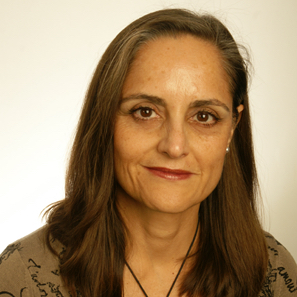
Dr. Purificación Matute, MD, PhD
Consultant, Department of Anaesthesia
Hospital Clínic & University of Barcelona
Barcelona
Spain
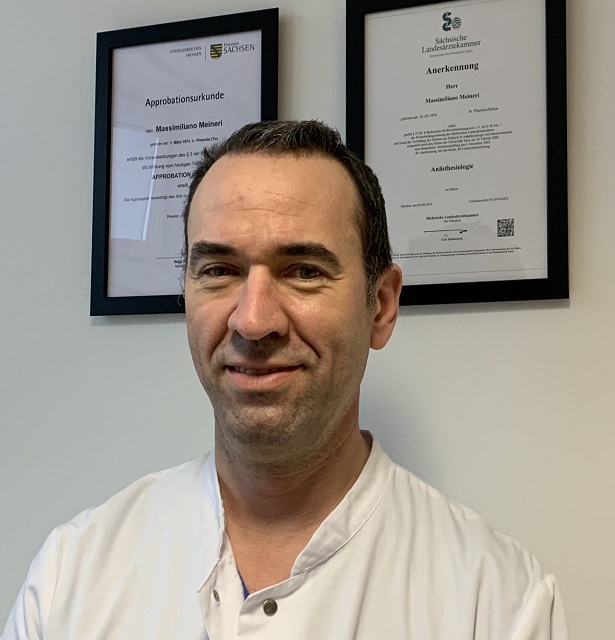
Professor M. Meineri “Usefulness of Echocardiography (TTE and TOE) during Open Vascular and Endovascular Surgery.”
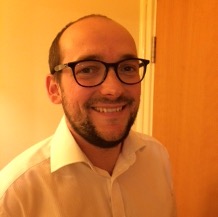
Dr M. Giménez “NIRS monitoring during vascular surgery”
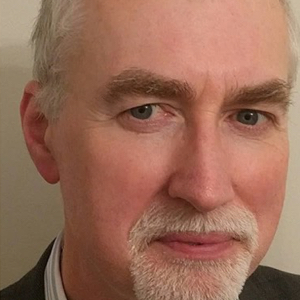
Dr A Tercero “Monitoring of evoked potentials during vascular surgery.”
Dr K Houthoff Khemlani – Monitoring to prevent spinal cord ischaemia (SCI). Updates on CSF drainage
Dr S. Howell “Perioperative Monitoring during Vascular Surgery”
Free registration is now open. Secure your seat!
If you are a new visitor and do not have an account on the EACTAIC eAcademy, complete the custom registration form. An account will be created instantly. Multiple fields may be required.
1) Click on Register Here

2) Complete the mandatory information
3) Click the Submit button to create your account
4) Check your email and click the direct link to watch the webinar. On the event page, click Join webinar.
5) If prompted, accept the terms and conditions of the eAcademy: https://academy.eactaic.org/eactaic/legal/terms-and-conditions
After participating in this webinar, you will better understand:
The EACTAIC Education Committee organised this webinar in collaboration with the EACTAIC Vascular Subspeciality Committee.
Vascular surgeons, vascular anaesthetists, perfusionists, intensivists, general anaesthetists, anaesthesia-certified nurses, nurses, interns, and medical students.
Mohamed R. El Tahan
EACTAIC Education Chair
P. Matute Jimenez
Spain
S. Howell
UK
| Time | Topic | Speaker |
|---|---|---|
| 17:00–17:25 | Usefulness of Echocardiography (TTE and TOE) during Open Vascular and Endovascular Surgery |
Prof. Massimiliano Meineri Herzzentrum Leipzig, Germany |
| 17:25–17:50 | NIRS Monitoring during Vascular Surgery |
Prof. Marta Giménez Spain |
| 17:50–18:15 | Monitoring of Evoked Potentials during Vascular Surgery |
Prof. Alberto Tercero Spain |
| 18:15–18:40 | Monitoring to Prevent Spinal Cord Ischaemia — Updates on CSF Drainage |
Prof. K. Houthoff Khemlani The Netherlands |
| 18:40–19:05 | Summary of Standard Perioperative Monitoring during Vascular Surgery |
Prof. S. Howell United Kingdom |
| 19:05–19:25 | Q&A Session | Faculty Panel |
| 19:25–19:30 | Wrap-up and Adjourn | Session Chair |
The Monitoring during Anesthesia for Vascular Surgery: Update, Rome, Italy, 09/05/2022- 09/05/2022 has been accredited by the European Accreditation Council for Continuing Medical Education (EACCME®) with 2 European CME credits (ECMEC®s). Each medical specialist should claim only those hours of credit that he/she actually spent in the educational activity.
Through an agreement between the Union Européenne des Médecins Spécialistes and the American Medical Association, physicians may convert EACCME® credits to an equivalent number of AMA PRA Category 1 CreditsTM. Information on the process to convert EACCME® credit to AMA credit can be found at www.ama-assn.org/education/earn-credit-participation-international-activities .
Live educational activities, occurring outside of Canada, recognised by the UEMS-EACCME® for ECMEC®s are deemed to be Accredited Group Learning Activities (Section 1) as defined by the Maintenance of Certification Program of the Royal College of Physicians and Surgeons of Canada.

.png)
EACTAIC YouTube Channel
https://www.youtube.com/channel/UCNJb0wLCaKjuFBUKKLhDjYQ
Talk: Opening
Speaker: Purificaciòn Matute Jimenez (Spain), Simon Howell (UK)
Talk: NIRS monitoring during vascular surgery
Speaker: Marc Giménez (Spain)
https://youtu.be/o3jvhAdvIQYTalk: Monitoring of evoked potentials during Vascular surgery
Speaker: Ana Tercero (Spain)
https://youtu.be/WaoKZZmuTgETalk: Monitoring to prevent spinal cord ischaemia. Updates on CSF drainage
Speaker: Kavita Houthoff Khemlani (The Netherlands)
https://youtu.be/By1S9AsPLuQTalk: Summary of Standard Perioperative Monitoring during Vascular Surgery
Speaker: S. Howell (UK)
https://youtu.be/SJAVJvCmQh4Talk: QA, Wrap Up
Speaker: Purificaciòn Matute Jimenez (Spain), Simon Howell (UK), and the Faculty
https://youtu.be/iDD0bD6zbPMWe insert them paramedial optodes in lumbar spine. Some of the centres recommend avoidance of decreases in 10% while others advocate for a threshold of 20% of variation. However, seeking more data from concomitant intraoperative evoked potentials can help us with diagnosis of spinal cord ischaemia.
To Dr Giménez: Does it make sense to use a local (frontal) measurement of tissue oxygenation to exclude the occurrence of focal ischemia - perhaps in a more distant cerebral area?
We are aware that NIRS has been used in paediatric population. We have no experience in adult population. Anatomical reasons can make the reading cumbersome and reflect subcutaneous oxygenation rather than kidney regional one.
Probably the perfusion of spinal thoracic and lumbar have differences. Collateral network is a great contributor of perfusion of lumbar spinal cord and thus we can study with NIRS sensors assessing regional oxygenation of paraspinal area. If you are more interested in this topic, a nice review that we can recommend is the following: Vanpeteghem, C. M., Van de Moortel, L. M. M., De Hert, S. G., & Moerman, A. T. (2020). Assessment of spinal cord ischemia with near-infrared spectroscopy: myth or reality?. Journal of Cardiothoracic and Vascular Anesthesia, 34(3), 791-796
There a few studies in Critical Care Unit relating changes in NIRS with development of delirium but the same does not apply for patients undergoing vascular surgery
We do not have experience with this in the vascular surgery setting either intraoperatively or in the immediate postoperative period
Both EEG and NIRS give us data about different function of the brain and therefore they should be complemented but not attempted to find correlation between them. NIRS has shown correlation with Transcranial doppler and evoked potentials.
They have different profile in terms of prone and cons which make comparisons really difficult. Evoked potentials is a well stablished technique to study spinal cord function while for NIRS we still need more experience and evidence
Some limited evidence recommending 20% of decrease from baseline could make decision to insert shunt. However there are also technical and anatomical issues to contemplate.
Thank you for your attendance and your interest
Same answer than in question 7
Neuromusuclar blocking agents will not interfere with SSEP becuase as you said, they don't block nerve transmission, but MEPs register the responses in muscles, not nerves. We stimulate primary motor area and register in differente muscles a compound muscular action potential (CMAP), so as far as neuromuscular blocking interfere with neuromuscular transmission, it's recommended to avoid this agents for a reliable MEP registers.
There is no evidence for a prophylactic application of RBC before an endovascular aortic repair. One should consider preoperative treatment of iron deficiency anaemia.
After placing a CSF drain, the pressure should be monitored to prevent over drainage. One might use a classic Codman system or a pressure-controlled automatic pump system for monitoring. For surveillance of neurological function to detect a spinal hematoma early, the patient should be admitted to a unit that can provide such a level of surveillance (e.g. intermediate care, ICU).
I recommend applying the most recent guidelines on regional anaesthesia in patients receiving antithrombotic or thrombolytic therapy that ASRA and ESRA have published. According to these guidelines, agents such as clopidogrel should be discontinued 7 d before the procedure, while ASA might be continued.
According to the ESRA guidelines, one should maintain an interval of at least 60 minutes after placing a central nervous block before administration of iv unfractionated heparin (UFH). There are no recommendations that restrict the iv dose of UFH. However, in case of an accidentally bloody tap, the surgical procedure and iv UFH administration should be postponed for at least 24 hours. In this case, close communication with the surgeon is important.