Associations Between Expiratory Flow Limitation and Postoperative Pulmonary Complications in Patients Undergoing Cardiac Surgery
URL: https://www.jcvaonline.com/article/S1053-0770(21)00616-9/fulltext
DOI: https://doi.org/10.1053/j.jvca.2021.07.035
Published: Journal of Cardiothoracic and Vascular Anesthesia. 2022 Mar;36(3):815-824.
Authors: Lorenzo Ball, Carlo Alberto Volta, Francesco Saglietti, Savino Spadaro, Antonio Di Lullo, Giulio De Simone, Marcello Guarnieri, Francesca Della Corte, Ary Serpa Neto, Marcelo Gama de Abreu, Marcus J. Schultz, Alberto Zangrillo, Paolo Pelosi, Elena Bignami.
Polls
Stay tuned for upcoming polls!
Article description
- Postoperative pulmonary complications are a significant determinant of in-hospital length of stay and mortality in cardiac surgery patients.
- The authors aimed to determine the association between ventilator parameters during intraoperative ventilation and the development of PPCs in patients with cardiac surgery.
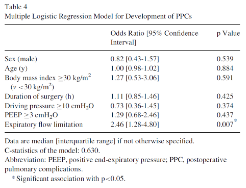
- The hypothesis was that higher driving pressures and the presence of expiratory flow limitation are independently associated with the occurrence of postoperative pulmonary complications.
- This was a single-centre prospective cohort study.
- Adult patients (> 18 years) undergoing elective cardiac surgery requiring sternotomy and CPB were eligible for enrollment in the study.
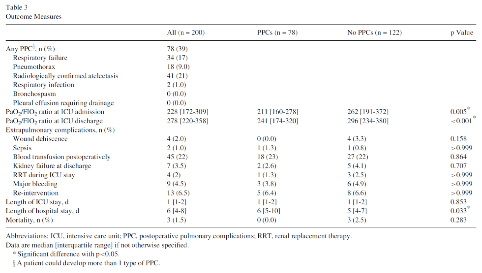
- The primary endpoint was a composite endpoint of postoperative pulmonary complications, including respiratory failure, pneumothorax, atelectasis, respiratory infection, bronchospasm, and pleural effusion requiring drainage. This was monitored until postoperative day seven or hospital discharge, whichever came first.
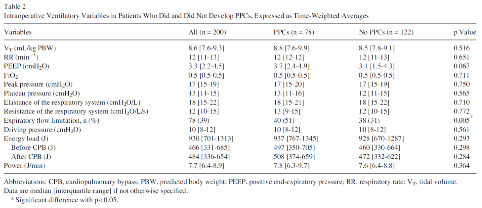
- According to clinical judgment and institutional recommendations, intraoperative ventilation was set in the VCV mode, with a tidal volume of 8 mL/kg on average, a PEEP level of 0 to 5 cmH2O, and a respiratory rate ensured normocapnia while allowing for zero flow at end-expiration. Before removing the aortic clamp, a standardized recruitment manoeuvre (40 cmH2O for 10 sec) was performed.
- Data were recorded at four-time points: before sternotomy, after sternotomy, after CPB weaning, and after sternal closure.
Summary:
Two hundred patients were enrolled. Postoperative pulmonary complications occurred in 78 patients (39%).